Precision machining offers many options for cutting metal with high accuracy. Two commonly used processes in this industry are plasma cutting and laser cutting.
On the surface, both methods seem quite similar. They are both thermal processes designed to cut metal plates and sheets. Both use a focused energy source to melt or vaporize material along a programmed path, allowing for precise, repeatable results.
However, that’s where the similarities essentially end.
In this month’s blog, we take a look at the primary difference between plasma and laser cutting and examine where each is best applied, so you can make an informed choice during the planning phase of your next metalworking project.
The Main Differences Between Plasma And Laser Cutting
Although both processes help fabricators achieve exceptional precision-machined results, in practice, they operate quite differently.
For example, plasma cutting works by forcing an electrically conductive gas such as compressed air, nitrogen, or argon through a narrow nozzle at an extremely high velocity. An electrical arc ionizes the gas, transforming it into plasma capable of reaching temperatures of approximately 20,000°C. The plasma jet melts the metal while the high-velocity gas blows the molten material away, creating the cut.
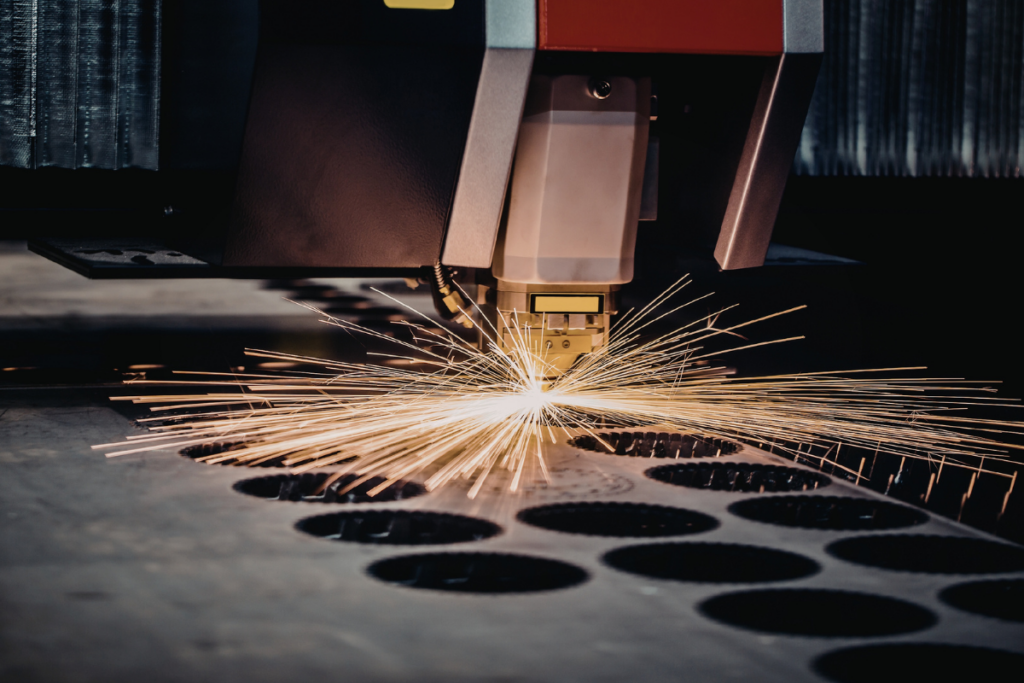
Conversely, laser cutting relies on a highly concentrated beam of light generated within a laser resonator and focused through precision optics. When directed onto the workpiece, the beam heats the material to the point of melting or vaporization. Gases such as nitrogen and oxygen are also applied to the workpiece to remove molten material and maintain cut quality.
While both approaches achieve the same fundamental goal, they are typically used for different applications.
When To Use Plasma Cutting
In off-road parts and equipment machining and fabrication, thick metal plates are commonly used for components such as vehicle frames, suspension components, and wear-resistant reinforcements. These plates frequently exceed 10 mm in thickness and can extend much further.
Plasma cutting is often the preferred method for quickly and economically cutting thick carbon steel, stainless steel, and aluminum. For heavy plate applications, particularly above 20 mm, plasma often provides a more practical balance of speed and cost than laser technology.
This technology is also effective for high-volume manufacturing of structural parts. Its cutting speeds remain relatively high even as material thickness increases, allowing fabricators to process large components such as chassis reinforcements or mounting plates used for heavy-duty industrial applications.
However, because plasma cutting involves varying material thicknesses and cutting parameters, secondary machining may be necessary to achieve optimal edge quality or final tolerances per the original design requirements.
When Laser Cutting Is The Best Option
Where plasma cutting excels at speed and heavy-plate capability, laser systems excel at precision, fine features, and superior edge quality.
Laser cutting offers extremely tight tolerances and narrow kerf widths on thinner materials typically under 12–15 mm in thickness. The focused beam creates clean edges with minimal heat-affected zones, reducing distortion and improving overall part consistency. It allows for intricate shapes, small holes, and complex contours that would be more difficult or less economical with plasma cutting.
Also, the method’s edge quality minimizes the need for secondary finishing, allowing many of the laser-cut parts to proceed directly to bending, welding, or assembly.
These advantages make laser cutting an ideal choice for machining off-road components such as sensor brackets, control system mounts, protective housings, or hydraulic interface plates.
However, this method has some drawbacks. For example, laser cutting becomes less efficient as material thickness increases. Cutting speeds also drop significantly due to the time-consuming nature of high-precision work, which can also result in higher processing costs. However, considering the accurate results that laser cutting provides, many manufacturers consider the investment well worth it.
Read More: Inside AOR’s Complete Fabrication Process
Trust Arrow Off-Road For The Best Recommendations On Metal Machining Processes
Arrow Off-Road specializes in supporting off-road OEMs’ project needs with customized solutions that help them reach their production goals.
We accomplish this by listening to our customers’ needs during our in-depth, collaborative discovery session. From there, we identify areas for improvement to optimize their manufacturing budget without compromising quality. Our team also provides its best recommendations on manufacturing processes, such as laser or plasma cutting, to ensure the highest-quality results that perform efficiently and reliably in the final application.
When you’re ready to enjoy the cost-effective benefits of partnering with Arrow Off-Road, give us a call today. We think you’ll like what we have to offer.
Read More: Why OEMs Are Consolidating Fabrication Suppliers, And How Arrow Off-Road Fits In
Arrow Off-Road: CNC Manufacturers In Canada Delivering Quality To Global OEMs
Partner with Arrow Off-Road for precise machining, welding, and fabrication solutions customized to your requirements and application. Request a quote for your next project to experience the Arrow difference in quality, precision, and service. Get in touch with us today!